Product-category guides

Adaptive vehicle equipment categories explained.

Review all seven core adaptive hardware categories, how each system operates, and practical questions to bring to a Certified Driver Rehabilitation Specialist or mobility dealer.

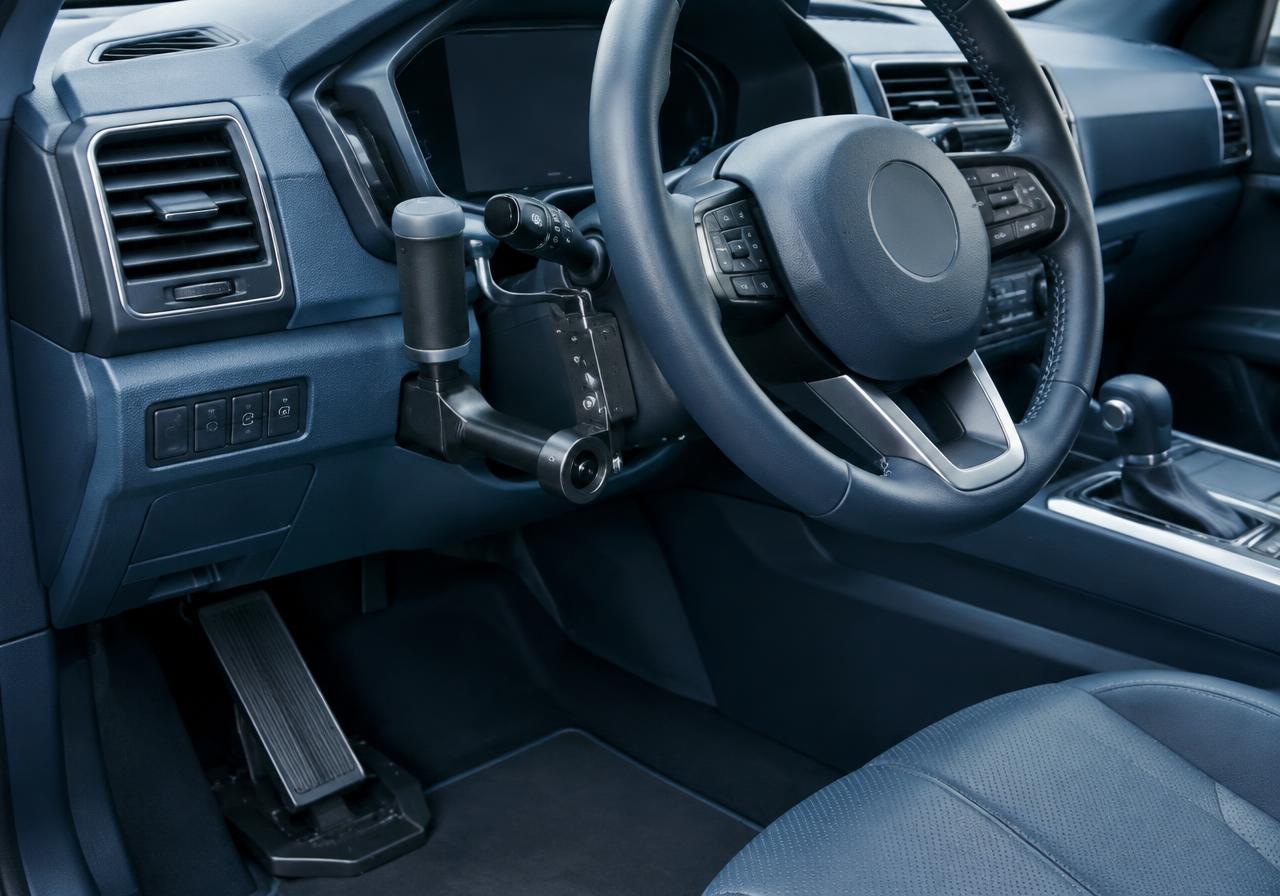
Mechanical hand control lever mounted beneath a modern vehicle steering column

Hand controls

Mechanical or electronic levers that let a driver operate the brake and accelerator using one hand while steering with the other.

How it works

Most U.S. installations use push-right-angle, push-rock, or push-pull mechanical linkages connected to the existing brake and gas pedals. Electronic ring or trigger accelerators are also evaluated for drivers with reduced arm strength.

Key fit considerations

  • Check knee clearance beneath the steering column and confirm airbag deployment paths remain unobstructed.
  • Pair mechanical hand controls with a removable pedal guard if unintended foot contact with the factory pedals is a concern.
  • Confirm whether other household members will also drive the vehicle using the factory pedals.

Questions for your evaluator

  • Which lever motion matches my grip strength and shoulder range of motion?
  • Does this vehicle trim leave enough under-dash space for a clean mechanical linkage?
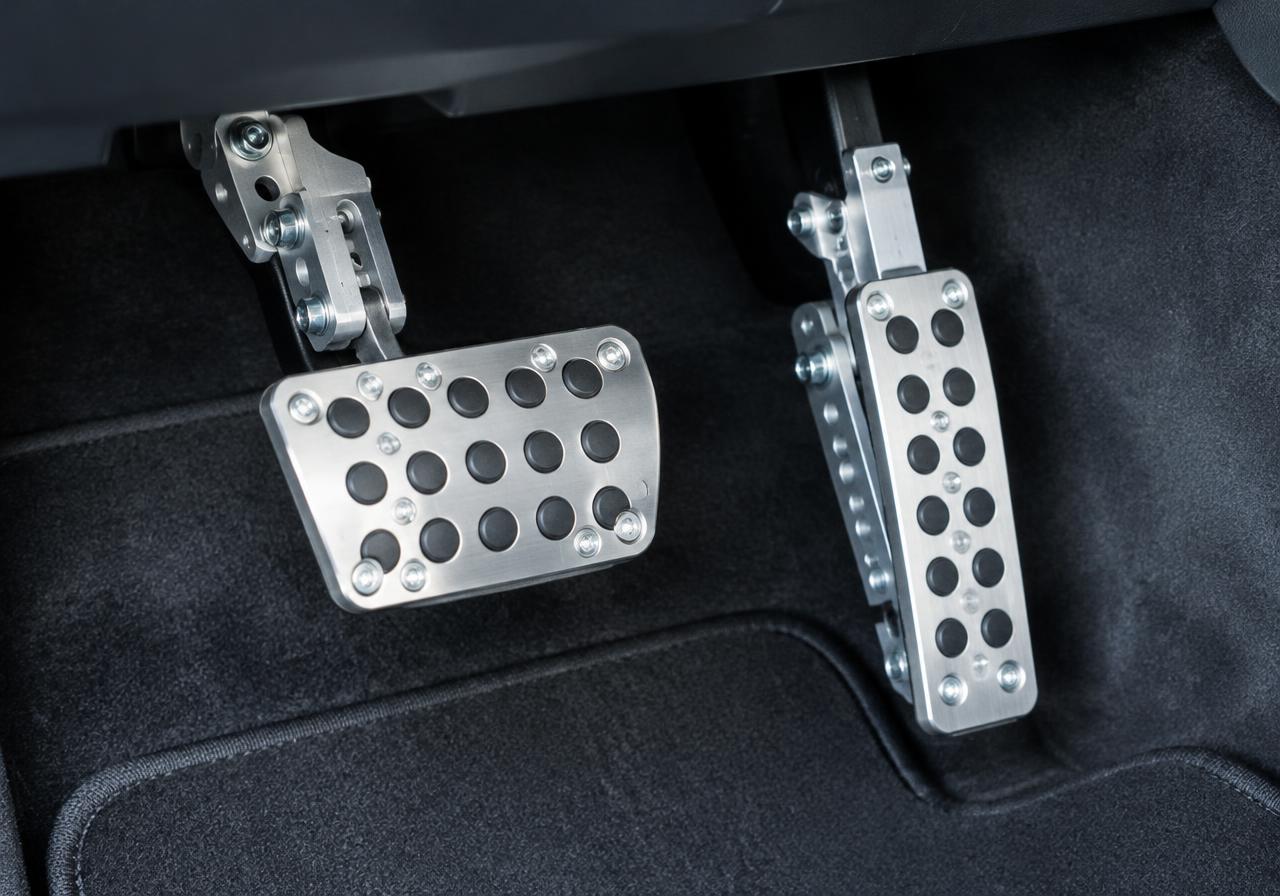
Adjustable aluminum and steel pedal extensions bolted onto car brake and accelerator pedals

Pedal extensions

Rigid, bolt-on metal extensions that bring the brake and accelerator pedals closer to the driver while preserving safe distance from the steering-wheel airbag.

How it works

Extensions clamp or bolt directly to factory pedal arms, adding two to twelve inches of reach. Quick-release styles let a second driver remove the extensions without tools.

Key fit considerations

  • Maintain at least ten inches between the driver's chest and the steering wheel center, per NHTSA safety guidance.
  • Check floor clearance and footwell width so extended pedals cannot snag on floor mats or adjacent trim.
  • Verify that a left-foot accelerator flip-up pedal is properly guarded when not in use.

Questions for your evaluator

  • Do I need fixed bolt-on extensions or quick-release mounts for shared family driving?
  • Will a pedal extender pair with a dead-pedal footrest to reduce leg fatigue?
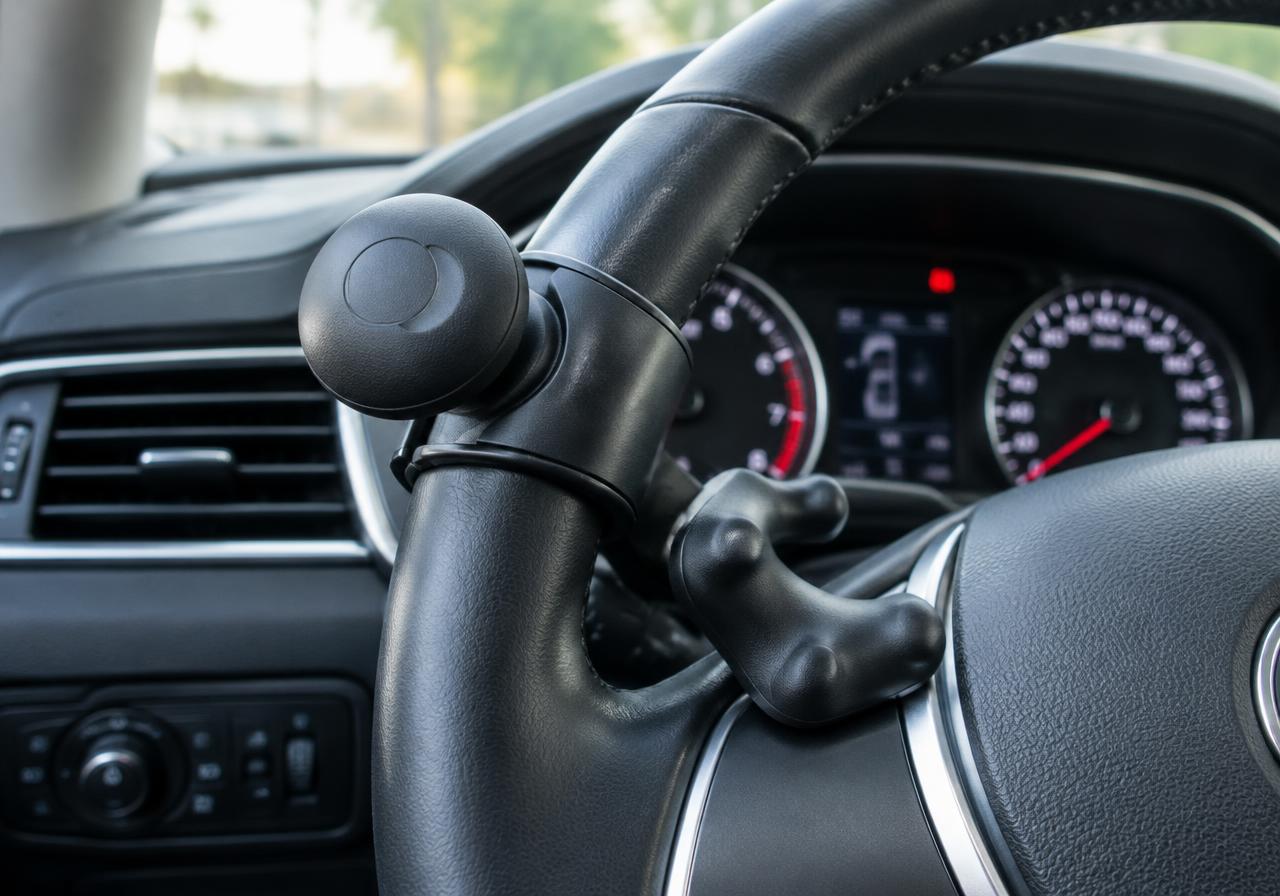
Matte black steering wheel spinner knob and tri-pin aid clamped to a leather steering wheel

Steering aids

Wheel-mounted grip devices and low-effort steering modifications that support controlled one-handed turns.

How it works

Spinner knobs, palm grips, V-grips, and tri-pin cuffs clamp onto the steering wheel rim and rotate on bearings so the wrist stays neutral through full turns. Reduced-effort steering lowers the physical torque required to turn the wheel.

Key fit considerations

  • Match the cuff or knob geometry to your hand grasp and wrist stability.
  • Confirm quick-release hardware if multiple drivers share the vehicle.
  • Consider secondary control switches for turn signals, wipers, and horn if one hand stays on a hand control.

Questions for your evaluator

  • Which steering aid position on the rim gives the cleanest turn radius without blocking gauges?
  • Is factory electric power steering light enough, or should reduced-effort steering be assessed?
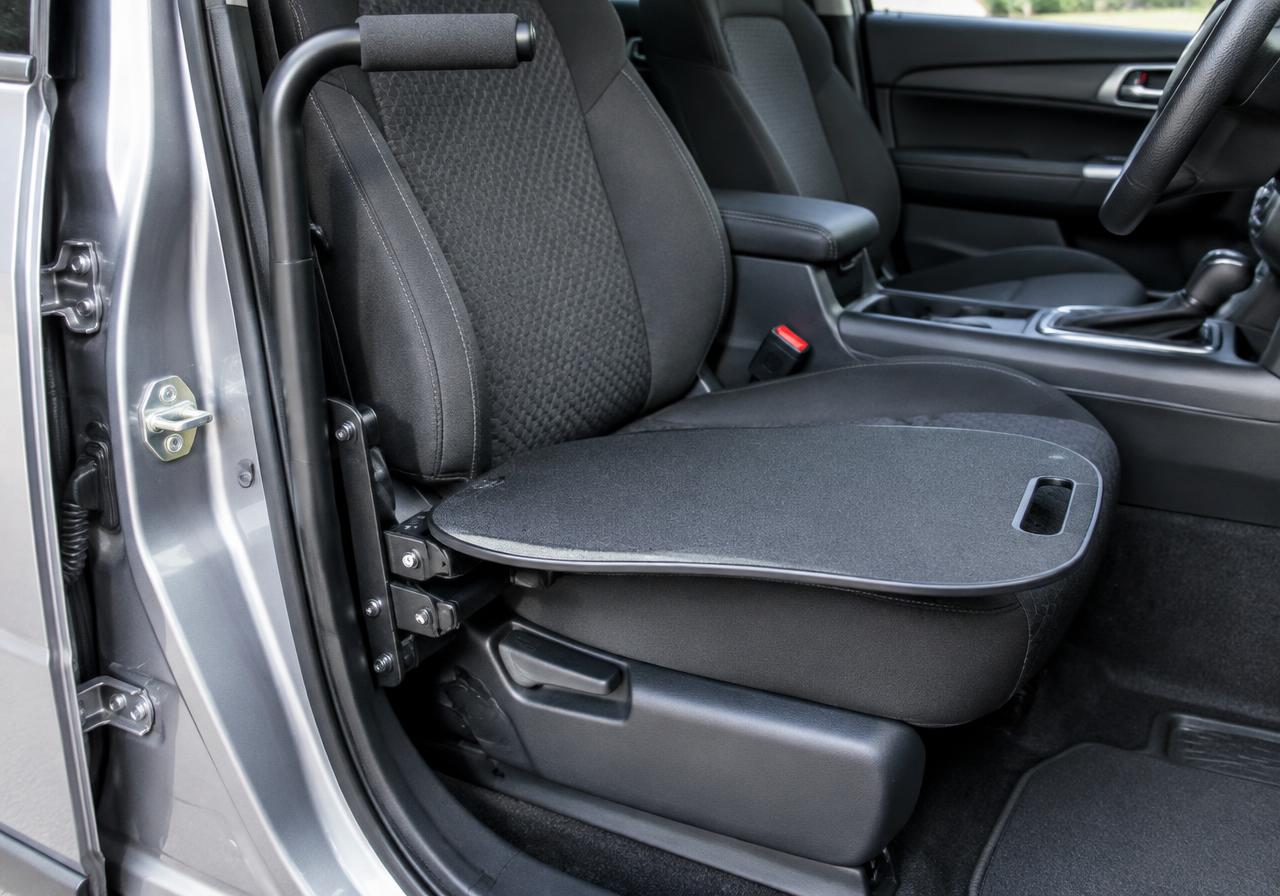
Vehicle transfer board and grab handle bar positioned next to a dark gray driver seat

Transfer aids

Grab handles, folding transfer boards, and swivel cushions that support safer movement from a wheelchair or walker into a vehicle seat.

How it works

Door-frame grab bars anchor into the B-pillar or door latch striker, while hinged transfer boards bridge the sill gap so a rider can slide smoothly onto the seat cushion.

Key fit considerations

  • Measure the vertical height difference between your wheelchair cushion and the vehicle seat surface.
  • Check door-opening swing angle; wider-opening doors make side transfers noticeably easier.
  • Confirm load ratings and anchoring points for any permanently bolted grab bar.

Questions for your evaluator

  • Does this vehicle's door sill height work with a flat transfer board, or is a powered base needed?
  • Will the grab handle interfere with side-curtain airbags or door seals?
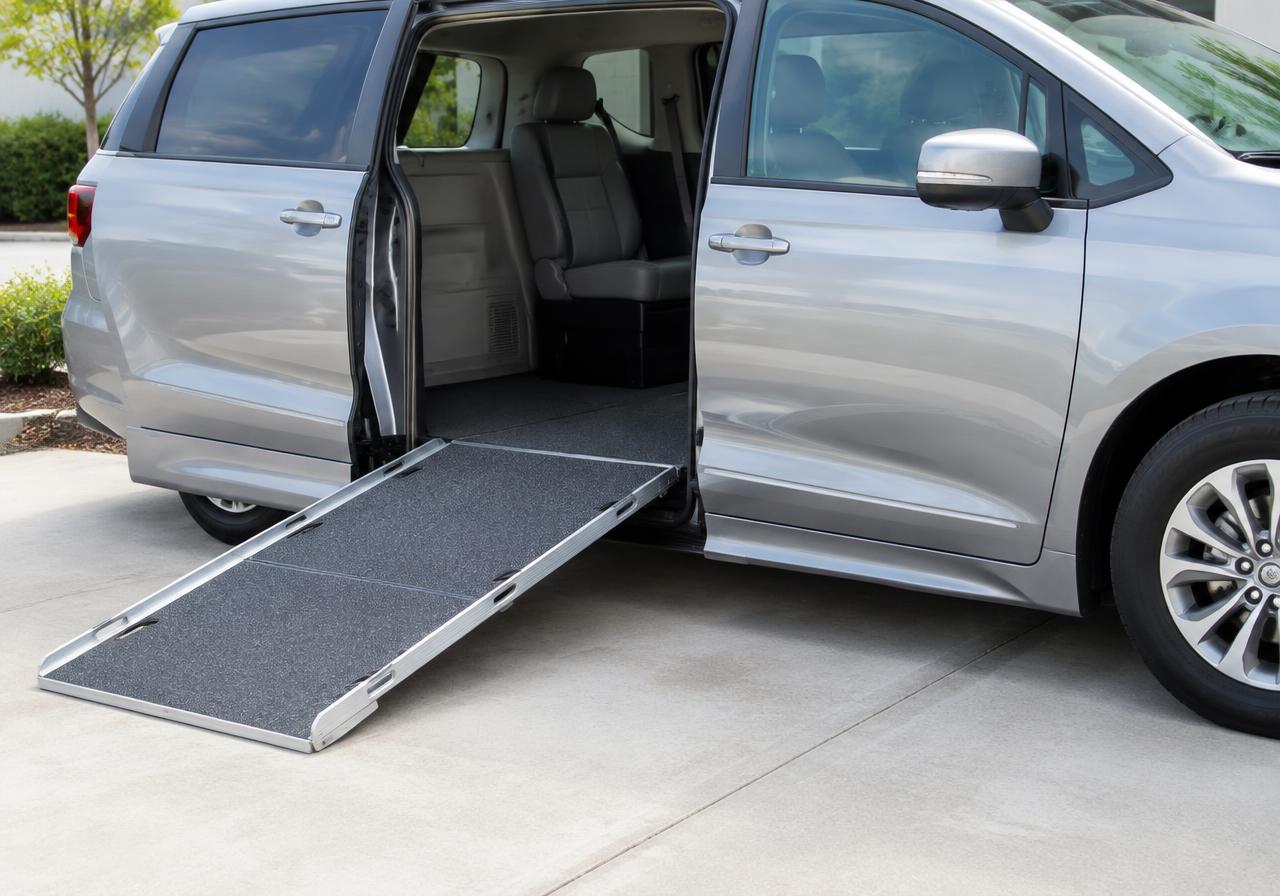
Aluminum fold-out wheelchair entry ramp deployed from a silver minivan side door

Entry aids

Fold-out ramps, in-floor ramps, and hydraulic platform lifts that allow wheelchair or scooter users to enter a vehicle without transferring.

How it works

Side-entry and rear-entry accessible minivans use lowered floors paired with manual or powered ramps. Full-size vans often use under-vehicle or interior hydraulic platform lifts for heavier power chairs.

Key fit considerations

  • Measure the combined seated height of the rider and wheelchair against the vehicle's door opening and interior ceiling height.
  • Compare side-entry parking space requirements with rear-entry flexibility in standard parking stalls.
  • Ask about manual backup operation in case the vehicle battery runs low.

Questions for your evaluator

  • What ramp slope ratio is manageable for my manual or power chair on typical driveways?
  • How much interior turning radius is needed to position the chair at the driver or passenger station?
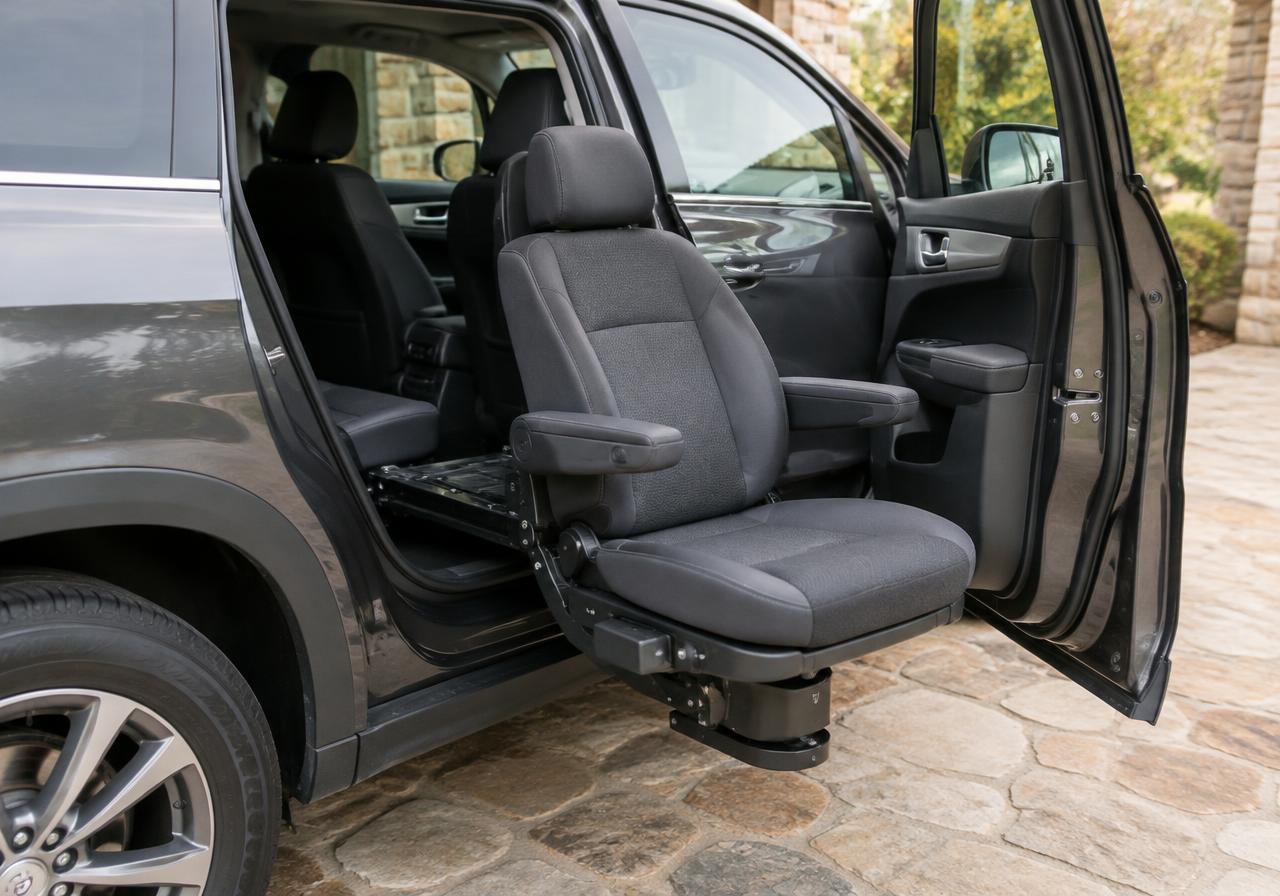
Motorized swivel and lowering transfer seat rotated outward from an SUV doorway

Seating modifications

Powered swivel bases, six-way transfer seat tracks, and removable front seats designed to improve boarding and cabin positioning.

How it works

A six-way power seat base slides backward, turns inward, and adjusts vertically so a driver can transfer from a wheelchair behind the front row. Swivel-and-lower seats rotate outside the doorframe and descend toward wheelchair height.

Key fit considerations

  • Confirm whether the modification retains factory seatbelt geometry and side-airbag sensors.
  • Check legroom clearance during the swivel arc so feet clear the A-pillar and dashboard.
  • Verify total weight capacity of the seat base, including winter gear or cushions.

Questions for your evaluator

  • Is a six-way interior transfer base or an exterior swivel-lowering seat better for my daily parking routine?
  • Can the modified seat base be transferred to a future vehicle of similar size?
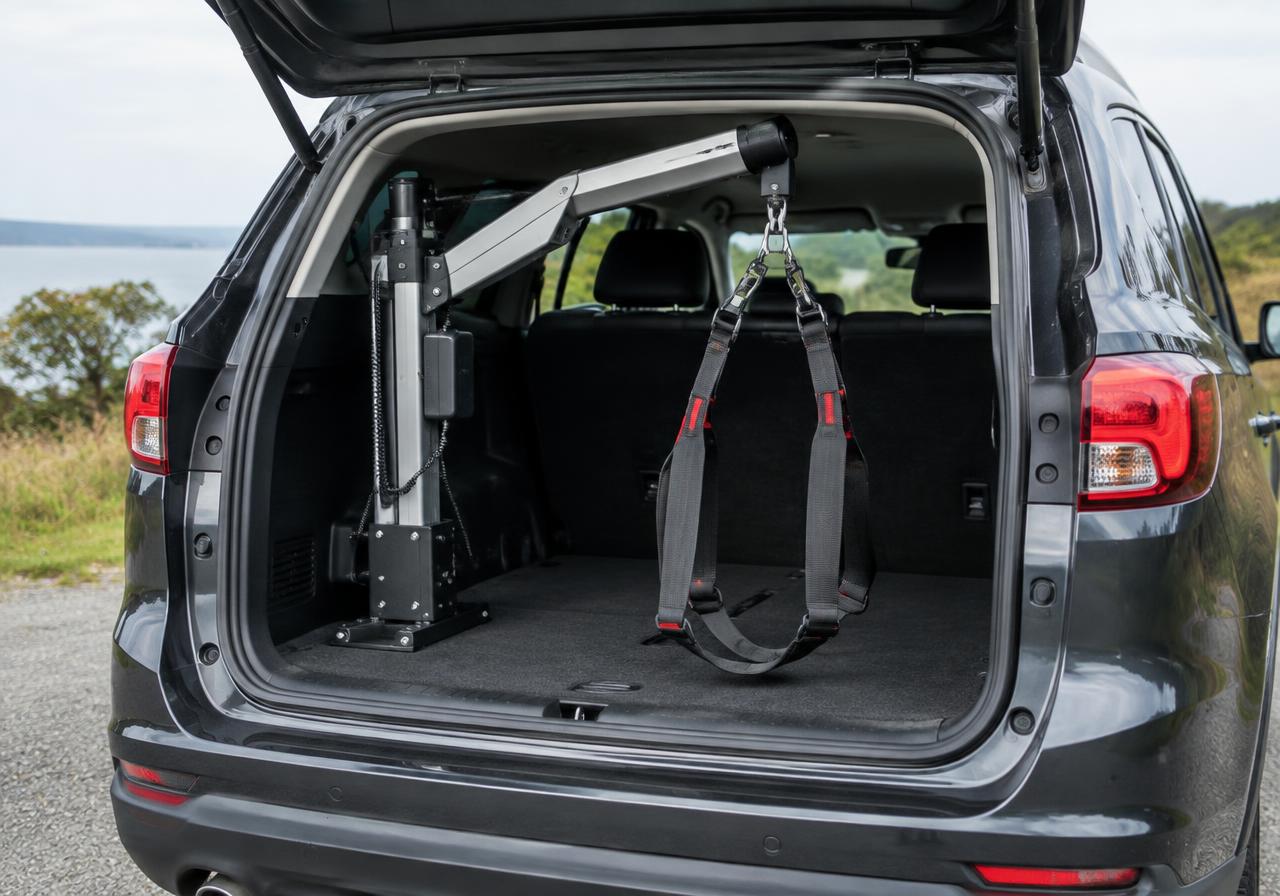
Electric wheelchair crane hoist mounted inside the rear cargo bay of an SUV

Mobility-device storage

Trunk crane hoists, exterior hitch-mounted platform lifts, and rooftop carriers built to load and secure wheelchairs or scooters.

How it works

Interior hoists use a powered boom arm to lift a folded wheelchair or disassembled scooter into a trunk or cargo bay. Hitch-mounted lifts carry assembled chairs behind the rear bumper on a folding steel platform.

Key fit considerations

  • Confirm your vehicle's Class II or Class III hitch tongue-weight rating before choosing an exterior platform lift.
  • Measure rear cargo opening height and depth against your mobility device's folded dimensions.
  • Consider weather covers and rear-camera or parking-sensor clearance for exterior carriers.

Questions for your evaluator

  • Does my vehicle's rear suspension handle the combined weight of the lift and mobility device?
  • Can I operate the hoist straps or docking latch independently without strain?

Ready to record your vehicle measurements?

Use our browser-saved planning checklist to prepare for your next clinic visit or showroom appointment.

Open planning checklist